
The GOP Standoff: Why Your Platinum Card Won't Get You Into a Japanese Hospital
The Gatekeeper You've Never Heard Of
You have travel insurance. You have a premium credit card. You have a domestic health plan back home. You assume that if something goes wrong in Japan, you are covered.
You are not covered. You have reimbursement. What you do not have is access.
Japanese hospitals do not care that Blue Cross will pay you back in six weeks. They care about one thing: a piece of paper, faxed to their admission desk, guaranteeing that someone will pay them now. This document is called a Guarantee of Payment (GOP). Without it, the door stays closed.
The "Pay and Claim" Fallacy
North American insurance operates on a simple assumption: You pay, then you claim, then you get reimbursed. This works fine in a system designed around credit and delayed settlement.
Japan's medical system does not work this way.
Japanese hospitals require 100% payment upfront from foreign tourists—or a deposit before they will even admit you. At the University of Tokyo Hospital, a standard hospitalization requires a 500,000 yen (~$3,500 USD) deposit. A liver transplant? 15,000,000 yen. That is $100,000 in cash or a single credit card transaction before they will prep the operating room.
Your credit card insurance cannot help you here. It is designed to reimburse you after treatment, not to pay the hospital during treatment. The hospital does not want a promise from Chase. They want a guarantee from an entity they recognize—faxed to them in Japanese, on letterhead, before you are wheeled past reception.
The Fax Machine Paradox
Here is the absurdity: Japan runs one of the most technologically advanced healthcare systems in the world, but admission is gated by a fax machine.
A Guarantee of Payment must be a physical document, transmitted via fax, from a recognized Japanese assistance company. Not an email. Not a PDF. Not a phone call from a US bank's 1-800 number. A fax.
Your Amex Platinum concierge cannot do this. Your domestic insurer cannot do this. They do not have contracts with Japanese hospitals. They do not have staff who speak Japanese at 3 AM. They do not have fax machines connected to the admission desks of Tokyo University Hospital.
The only entities that can produce this document are local assistance companies—Emergency Assistance Japan, International SOS Japan, MS&AD Grand Assistance—and they only issue GOPs for travelers whose insurance policies have pre-existing contracts with them.
If your policy does not have this backend network, you do not have a GOP. And if you do not have a GOP, you have a problem.
The Ambulance Refusal
The most dangerous manifestation of this system happens before you reach the hospital.
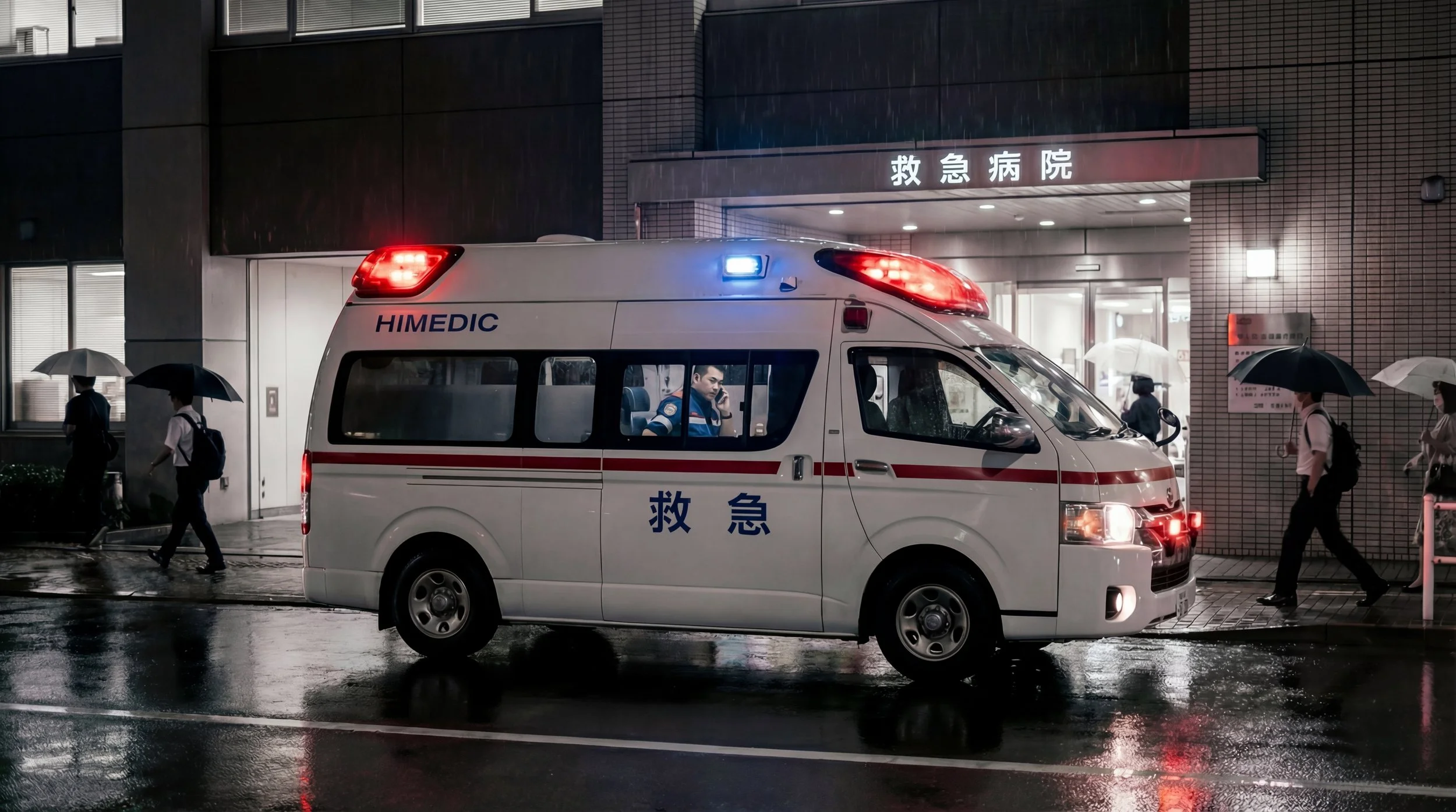
Japanese paramedics cannot simply drop you at the nearest ER. They must call ahead and secure acceptance. When they call, they disclose your insurance status. If the answer is "foreign tourist, no Japanese coverage," hospitals frequently decline—citing capacity issues or language barriers. In reality, this is financial triage.
This phenomenon has a name: tarai mawashi—literally, "passing the basin around." Ambulances circle. Paramedics make call after call. Documented cases show patients rejected by dozens of hospitals before finding one willing to accept them.
For critical trauma—a ski accident in Niseko, a stroke in Osaka—this delay is not administrative inconvenience. It is a threat to survival.
But if the paramedic can say, "The patient has an assistance company on the line with a GOP ready to fax," the calculus changes. You are no longer a liability. You are a secured revenue stream. The door opens.
The Cost Multiplier
Even if you clear the admission barrier, the financial math is brutal.
Japan's healthcare system operates on a "point" system. Every procedure is assigned a point value—10 yen per point for residents enrolled in the National Health Insurance (NHI) system, who pay only 30% out of pocket. For uninsured tourists, hospitals charge 20 to 30 yen per point, and you pay 100%.
Patient Status Cost per Point Out-of-Pocket Japanese Resident (NHI) 10 yen 30% co-pay Foreign Tourist 20–30 yen 100% upfront
A procedure that costs a resident $1,000 (with $300 out of pocket) costs you $2,000 to $3,000—payable immediately, in full, before discharge.
And if you leave without paying? Japan now links unpaid medical debt to immigration control. Outstanding bills can result in denied entry on future visits. The souvenir you take home might be a permanent ban.
The Only Solution: Full-Service Insurance
The GOP is not a backend financial transaction. It is a travel document—as essential as your passport.
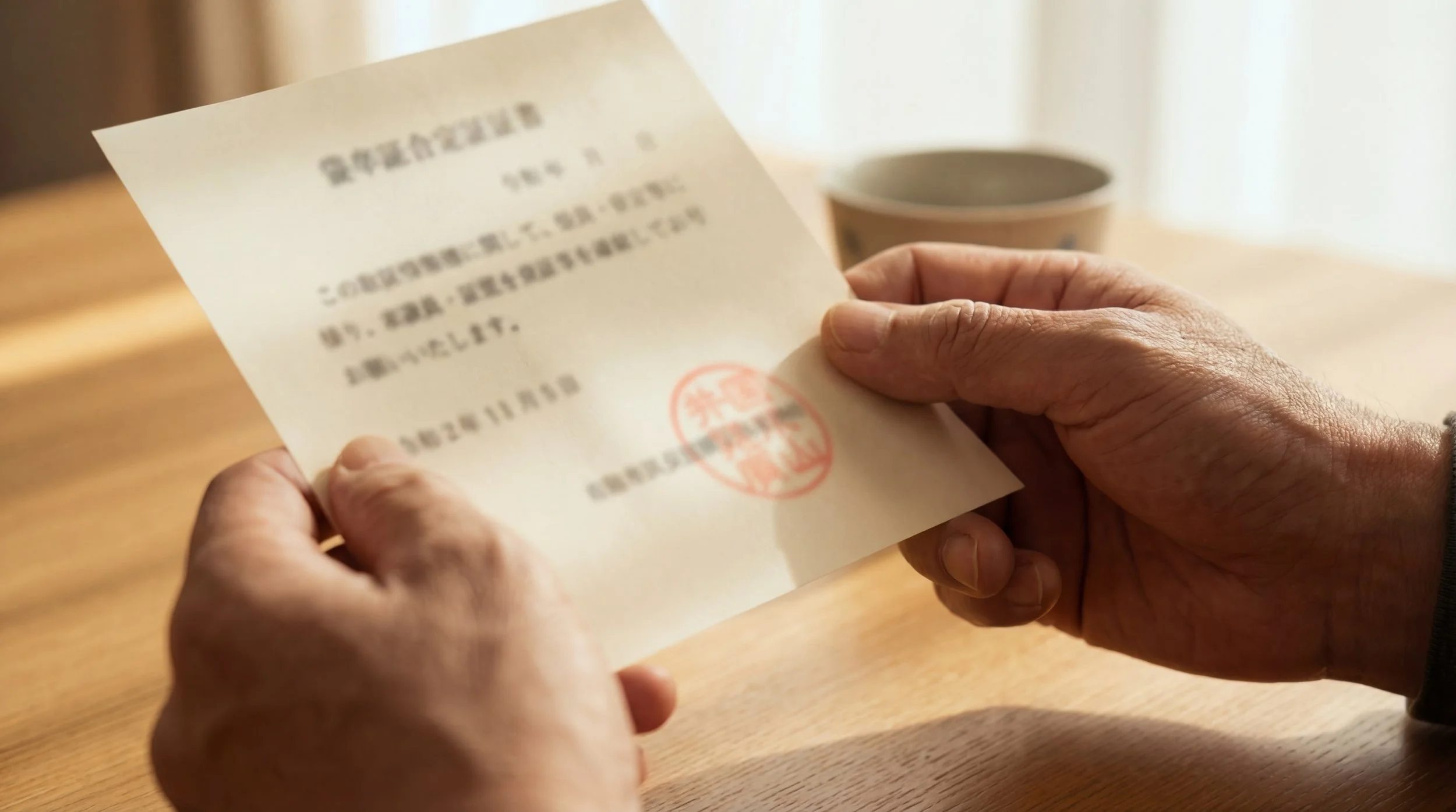
Full-service travel insurance policies include contracts with Japanese assistance companies. When you call their hotline, they do not ask you to float the bill. They call the hospital in Japanese. They fax the GOP. They negotiate your admission. You walk in without opening your wallet.
This is what separates "insurance" from "assistance." Insurance pays you back later. Assistance gets you through the door now.
Preserving Your Peace
Preserving your peace in Japan is an intentional act. If you have spent months planning the perfect itinerary—the ryokans, the ramen shops, the mountain temples—do not let a medical emergency become a bureaucratic hostage situation at an admission desk that only accepts faxes.
I've found that the best way to bridge the gap between "theoretical coverage" and "physical access" is to carry a Full-Service Travel Insurance policy with GOP capability and a 24/7 Japanese-speaking assistance line. Your credit card can cover lost luggage. It cannot unlock a hospital door.
Read my full guide to Travel Insurance options for North Americans here.
Conclusion
The assumption that you are "covered" because you have insurance is a North American fantasy that collapses at the Japanese hospital reception desk. Coverage is not access. Reimbursement is not admission. A promise to pay later is not a Guarantee of Payment now.
In Japan, the GOP is the key. Without it, you are standing outside the best healthcare system in Asia, holding a useless piece of plastic, waiting for a fax that will never come.
Buy a real policy. Carry the key.