
Shibamata, Tokyo: A Guide to the City's Most Nostalgic Old Town
The "Kyoto of Tokyo": Why You Should Visit Shibamata at Twilight.
I love the grind of Tokyo. The sheer density of Shinjuku, the lights, the energy—it’s why I’m an urbanite at heart. But even the most dedicated city dweller hits a wall. You eventually crave a "nature vibe," or in this case, a "Kyoto feel" without the bullet train ticket.
Enter Shibamata. Located in the Katsushika Ward, about 40 minutes from Tokyo Station, this is an enclave that time seemed to forget. It doesn't have the "ultra-urbanized" polish of central Tokyo. Instead, it offers the charm of a bygone era, where the rhythm of the street is set by the slow shuffle of locals, not the rush hour crunch.
Getting There: A Journey Back in Time
The train ride out to Shibamata feels like a decompression session. You leave the steel and glass behind and watch the city scale down.
The Route: Connect via the Keisei Line to Shibamata Station.
The Vibe: As soon as you step off the platform, you aren't in the metropolis anymore. You’re in a shitamachi (downtown/old town) that invites you to put away the Google Maps and just walk.
The Sando: Artisans and Aromas
The path from the station to the temple is the Sando (approach). This isn't a tourist trap; it’s a living museum of commerce. You’ll walk past wooden shophouses where artisans have been perfecting their crafts for generations.
What to look for: The snacks here are legendary. Look for Kusa Dango (mugwort dumplings) being made fresh. The expertise you see in these shops comes from a lifetime of practice—it's the "real deal."
Shibamata Taishakuten: The Wood Carving Masterpiece
At the end of the Sando stands the Shibamata Taishakuten. Founded in 1629 (Kan'ei period), this Nichiren Buddhist temple is a stunner. While many Tokyo temples were rebuilt with concrete after the war, Taishakuten retains its historic wooden integrity.
The Architecture: The Nitenmon Gate is imposing and beautiful. If you look closely at the temple walls, you'll see why it's famous for its unpainted, intricate wood carvings that depict Buddhist tales. It’s a place to be absorbed by the details.
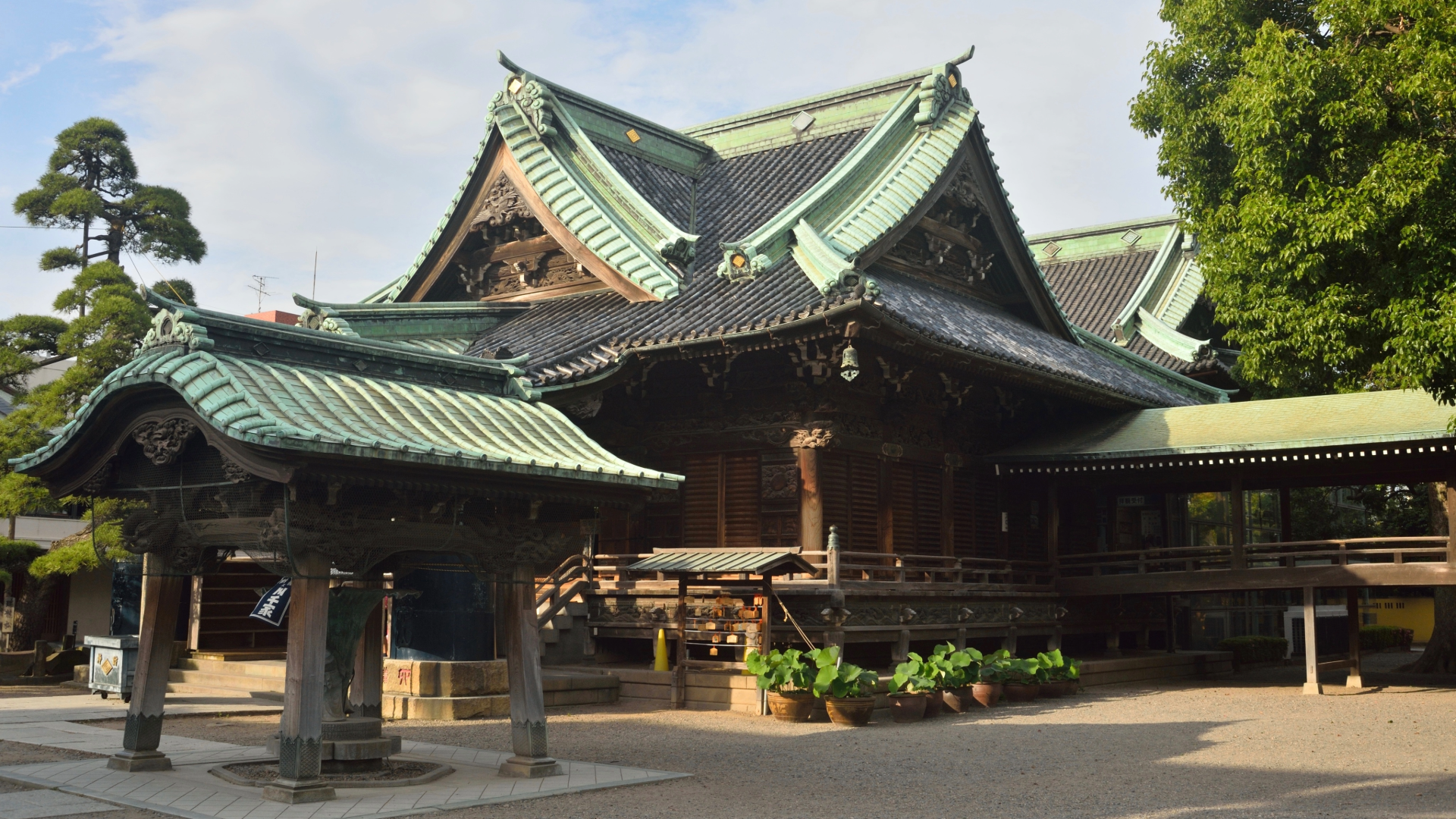
Shibamata Taishakuten temple grounds
The Legend of Tora-san
You can't talk about Shibamata without talking about Tora-san. This town was the setting for the Guinness World Record-holding movie series Otoko wa Tsurai yo ("It's Tough Being a Man"), which ran for over 30 years.
Tora-san was a traveling salesman and the quintessential underdog with a heart of gold. He represents a resilience and a pursuit of happiness that still permeates these streets. When you walk here, you are walking through cinematic history.
Twilight in the Old Town
If you can, time your visit for late afternoon. As the shops begin to close and the crowds thin out, the lanterns flicker on. The glow cuts through the twilight, creating an ambiance that is pure magic. It’s quiet, it’s inviting, and it proves that this mega-city isn't just skyscrapers—it’s also quiet corners where the day ends slowly.
Preserving your peace in Shibamata is an intentional act. If you’ve spent your evening soaking in the lantern-lit nostalgia of the Old Town, don't shatter that feeling by fighting for space on a standing-room-only commuter train back to Shinjuku.
I’ve found that the best way to bridge the gap between this quiet enclave and the city center is to upgrade to the Green Car once you transfer back to the JR lines. For the price of a mid-range lunch (about $19), you buy a reserved seat, extra legroom, and the silence required to keep the 'Shibamata vibe' alive while you head back to the neon lights. Read my full Green Car Upgrade Guide here.
— TRAVEL RESOURCES —

Official Japan Rail Pass Vendor